


JRF Study Reveals Impact of Climate Change on Family Dynamics
Monday, December 8 - The Jordan River Foundation (JRF) has released the findings of a new study addressing climate change impacts on family dynamics in Jordan. “Investigating the Impacts of Climate Change on Household Dynamics in Jordan: A Special Focus on Women, Children, and Youth” was conducted under the “Sustainable Self-Reliance for Vulnerable Syrian Refugees and Jordanian Host Communities Across Jordan” Project, implemented by JRF and funded by the European Regional Development and Protection Program for Jordan and Lebanon (RDPP III).
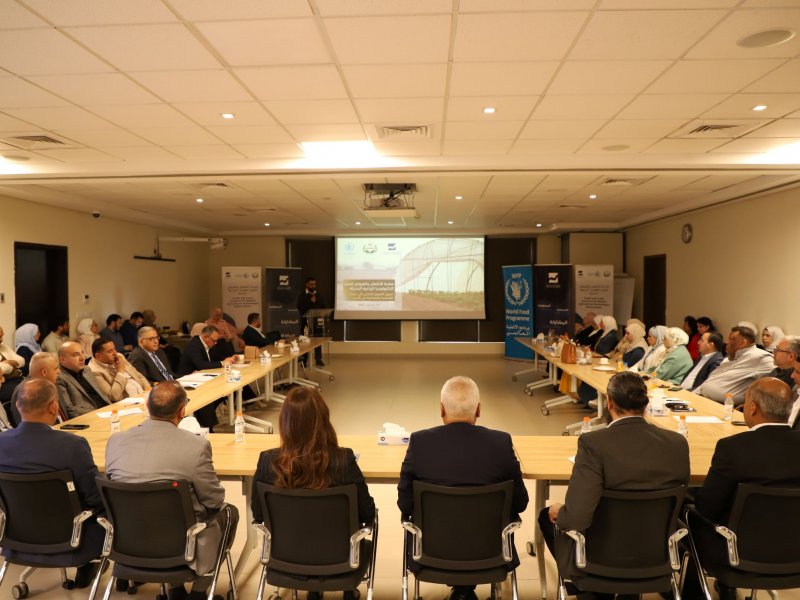
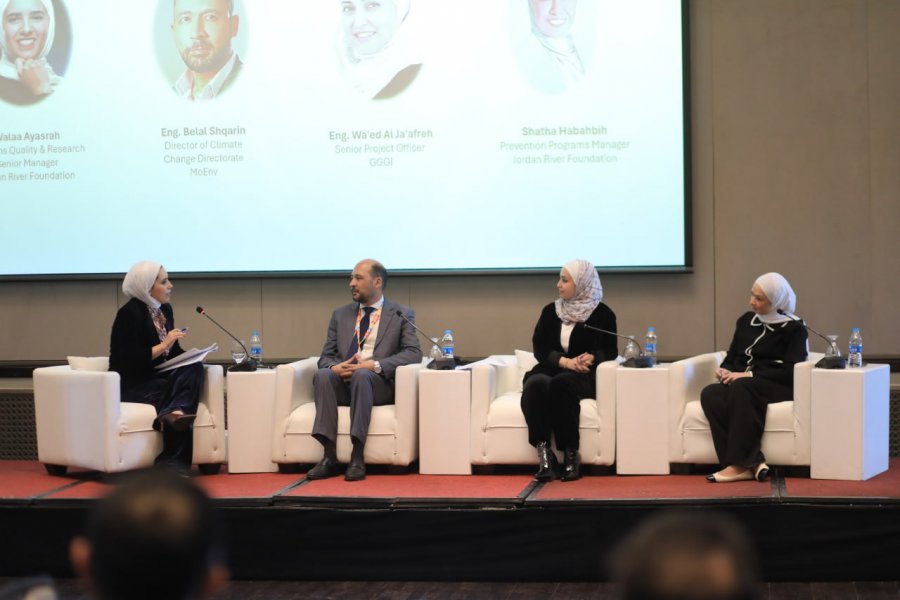
The study, released during an event held under the patronage of the Minister of Environment, represented by the Ministry’s Secretary-General, Dr. Omar Arabiat, adopted a participatory approach that combined quantitative and qualitative research; surveying households from diverse socioeconomic backgrounds, most of them living below the poverty line.
Findings show that climate change is driving notable shifts in family structures and social roles. The study also offers a road-map for strengthening the links between climate, the economy, and social protection at the household level, paving the way for more resilient policies and responses.
“Climate change is no longer an environmental concern—its ripple effects are reshaping families, livelihoods, and social roles. The study clearly reveals how burdens on women have multiplied and how risks to children have increased, underscoring the need for integrated, evidence-based development responses.” reiterates JRF’s Director General Enaam Barrishi.
Dr. Arabiat, Secretary-General of the Ministry of Environment, noted that the findings align with Jordan’s national direction—championed by His Majesty King Abdullah II—toward highlighting the interplay between climate change, displacement, and development. Arabiat pointed to Jordan’s evolving policy frameworks, including the National Adaptation Plan, the National Climate Change Policy (2022–2050), and the Nationally Determined Contributions, all aimed at enhancing the Kingdom’s resilience and protecting its most vulnerable populations.
RDPP III - Jordan Partnership Manager, emphasized that “a green transition cannot succeed unless it is fair, inclusive, and grounded in evidence. Empowering women and youth is not a side benefit of climate action—it’s a prerequisite for its success and sustainability,” - noting that this vision is reflected through partner interventions across renewable energy, small green enterprises, decent work opportunities, and social protection.
The study forms a core component of the Sustainable Self-Reliance for Vulnerable Syrian Refugees and Jordanian Host Communities Across Jordan” Project, which JRF has been implementing in partnership with RDPP since 2017. Over the years, the program has achieved substantial, lasting impact in the support of livelihoods. This includes strengthening the institutional capacities of local associations and equipping thousands of Jordanians and Syrians with life-skills, entrepreneurship, and employability training. To date, 323 projects have been supported, and 355 job seekers have been trained and linked to employment opportunities in collaboration with more than 45 private-sector partners